
Home and Family
How to Make a Home Inventory for Insurance
TL;DR
- Walk the home one room at a time. Photograph rooms and open closets, then list items that would be hard to replace or hard to remember.
- For valuable items, write a description, a serial number if there is one, and what you paid if you still know it. Keep receipts when you have them.
- Store a copy off-site or in a cloud account you can reach after a fire, theft, or storm — not only in a desk drawer in the same house.
- Update the list when you make a major purchase, and look at it once a year. A short, current list beats a perfect list you never finish.
A home inventory is a list — usually with photos — of what you own, so you can describe it later to an insurer, and so you can remember what was in a room if you cannot walk back into it. You do not need special software to start. You need a method you will finish. The Insurance Information Institute publishes a public guide to creating a home inventory. Ready.gov, the federal emergency-preparedness site, also encourages households to keep important records where they can be reached after a fire or other disaster. This page turns that advice into a walk-through you can complete on a weekend. It is not insurance advice, and it does not tell you what your policy covers. For coverage questions, read your policy and talk to your insurer.
Walk the home with a camera first
Start at the front door and go room by room, including hallways, closets, the basement or attic, the garage, and any shed you would want to claim. Take a wide photo from the doorway, then a second photo from the opposite corner. Open closets and cabinets and photograph the shelves. You are not making an art project. You are making a record of what was there.
If you share the home, agree on who will walk which rooms so you do not skip the workshop or the kids’ closets. A phone camera is enough. If a video walk-through is easier, record slowly and say the room name out loud as you enter. You can still pull still photos later. Do not only photograph the “nice” rooms. Tools, folding chairs, and the contents of a linen closet are easy to forget after a loss, and they add up.
Make a list of items that would be hard to replace or hard to remember
You do not have to catalog every spoon. Focus on furniture, electronics, appliances, tools, musical instruments, jewelry, bicycles, sports gear, and collections. For each item, write a short description, the brand if you know it, and a serial number if the item has one (common on TVs, computers, and some tools and appliances). If you still have a receipt, a credit-card statement, or a photo of a price tag, note what you paid and when. If you do not remember the price, say so; a description and a photo are still useful.
The Insurance Information Institute recommends recording this kind of detail and keeping documentation for higher-value items. Some policies have special limits for jewelry, art, or collectibles. An inventory will not change those limits by itself, but it will show you where you may want to ask your insurer a question. Work one room to the end before you jump to another. A half-finished whole-house list is harder to resume than a finished kitchen plus a dated note that says “garage next.”
Store a copy you could reach if you could not go home
A binder in a desk is useful on an ordinary Tuesday and useless if the desk is in a house you cannot enter. Keep a second copy in at least one other place: a trusted relative, a safe deposit box, or a cloud account you can open from a phone. Ready.gov’s planning guidance emphasizes having important documents available during an emergency. The inventory belongs with that thinking. If you use a cloud folder, confirm you know the login, and that someone you trust could find it if you were unavailable. You do not need to put sensitive numbers, such as full account numbers or passwords, on the same page as a furniture list. Keep those in a separate, more carefully stored file.
Update it when the house changes
Add a major purchase when you bring it home, while the receipt is still in the bag. Once a year, perhaps when you review insurance or change smoke-alarm batteries, walk the rooms with last year’s photos and notice what is new or gone. A short annual pass is easier than starting from nothing after a loss.
If you never finish a perfect spreadsheet, you can still have a useful inventory: a complete set of room photos, a list of the expensive or hard-to-replace items, and a copy stored somewhere other than the house. That is already much better than relying on memory in a claims office or a shelter. Start with one room this week, and give the file a name and a date so the next pass has a place to begin. If you later move the list into a printed binder or a shared folder, keep the same room order so you are not copying the house twice. The habit of updating matters more than the format you choose.
Share the location of the file with one other trusted person in the household, the same way you would share the location of a will or an insurance policy. An inventory no one else can find is only useful if you are the one making the call. If that feels like too much for this weekend, finish the photos and put them in a folder with today’s date. The list can catch up next weekend. The photos already do more than most households have after a loss.
Sources
Optional
A template if you want one
Use these if you want a ready-made file. The guides and tools work without them.
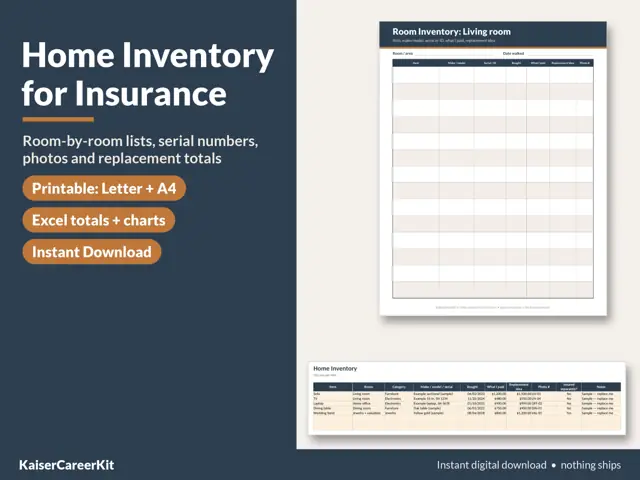
Home Inventory List for Insurance
Home Inventory for Insurance: a policy snapshot, room-by-room inventory pages, a photo and serial-number log, a claims worksheet and yearly update list, plus an Excel inventory that totals what you…
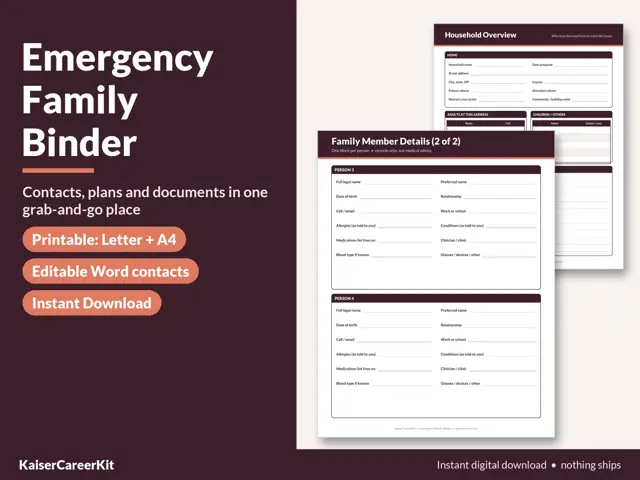
Emergency Family Binder Printable
Emergency Family Binder: household overview, family details, emergency and out-of-area contacts, insurance snapshot, document checklist, utility shut-offs, evacuation and shelter-in-place plans,…
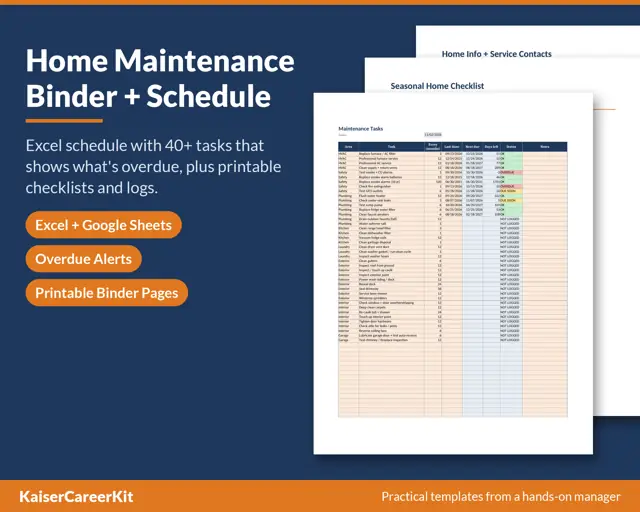
Home Maintenance Schedule Spreadsheet
When I managed a hotel, preventive maintenance was what kept small problems from turning into closed rooms and big bills.
More like this
Home and Family
How to Plan the Holidays on a Budget
Plan holiday gifts, food, and gatherings with a spending cap, a simple list, and deadlines, so December bills do not surprise you in January.
Free printable
Get the free Christmas word search
Print a sample of our holiday word search puzzles for family game night, the classroom, or a quiet evening with coffee. Big, easy-to-read puzzles.
Free download, no purchase needed. The checkout page may ask for an email address to deliver the file.