
Home and Family
How to Plan the Holidays on a Budget
TL;DR
- Set a total holiday amount first, then split it among gifts, food, travel, and extras. If the list does not fit, shorten the list — do not quietly raise the cap.
- Write every person or event on one page, with a dollar limit and a “done” column, so spending has a place to land.
- Choose a gift-giving rule (a name draw, a spending cap per person, or experiences) and tell people early, while it is still easy to change plans.
- Track as you go. A running total is more useful than a pile of receipts in January.
Holiday spending gets out of hand when it is treated as a series of small, reasonable decisions — a nicer gift here, a larger ham there — that are never added up. The season can still be warm and generous with a cap and a list. This is a planning guide, not financial advice, and it does not use national “average holiday spend” figures. Your number has to come from your own paychecks and bills. The Consumer Financial Protection Bureau’s consumer tools are a public place to keep reading about bills and budgets if you want more than a seasonal plan.
Set a cap before you make a list
Look at the paychecks that will arrive between now and the end of the year, minus the regular bills that still have to be paid: rent, utilities, insurance, debt minimums, and ordinary groceries. What is left is the pool you can draw from. If nothing is left, the honest cap may be very small, or the plan may be to spend no extra money and change how you celebrate. Write the cap down. A cap that exists only in your head will move the first time you walk through a store.
If you usually put holiday spending on a credit card and pay it off later, include that habit in the plan. Either raise the cap to an amount you can pay in full by a date you name, or decide not to use the card for gifts and food. A plan that assumes a January payoff you have not funded is not a cap. It is a delay.
Split the cap, then make the list fit
Divide the total into a few buckets: gifts, food and gatherings, travel, decorations, and a small miscellaneous line for the wrapping paper and the classroom exchange you forgot. The miscellaneous line exists so unplanned items have a home. When a bucket is empty, you stop spending in it, or you take money from another bucket on purpose and write that down too.
Only after the buckets exist should you write names and events. List each person you expect to give to, each meal you will host or attend, and any travel. Put a dollar amount next to each line, and add the amounts. If the list is larger than the cap, the list has to change. That can mean a name draw, a homemade gift, a potluck instead of a full hosted meal, or fewer people on the gift list. It is easier to have that conversation in November than on the 23rd of December.
Tell people the rule early
If your family or friend group can agree on a rule — a spending limit, a name draw, gifts for children only, or a shared meal instead of gifts — say it early, and say it kindly. You are not asking people to be less generous. You are making it possible to keep a promise you can afford. If someone will not join a rule, you can still keep your own cap. You control what you spend, not what other people choose to do.
For food, write the menu and the shopping list once. Hosting is often where a cap quietly breaks, because each extra side dish feels small. A written menu, with a budget for the store trip, is more reliable than browsing the aisles “to see what looks good.”
Track in the same week you spend
Keep a running total on the same page as the list. When you buy a gift, write the amount that day, not “later when I have the receipt.” If you shop online, include tax and shipping. If you baked or built a gift, count the supplies. The point is not to record every paper clip. The point is that the cap remains true.
Check the plan against your paycheck budget so holiday spending is assigned to a real payday, just like rent. If a check cannot cover both, the holiday line has to wait or shrink. In January, you should be able to look at the page and see what the season cost. That record is what makes next year easier. It is also how you avoid paying for this December through the spring.
A smaller, planned holiday is not a lesser one. It is a holiday that still fits the life you have in January.
Gifts that stay inside the cap
If the gift list is the problem, change the form of the gift before you change the cap. A homemade food gift, a shared photo book, a repaired or refurbished item, or a day together can sit inside a smaller number than a last-minute online order with shipping. What matters is that the person is on the list on purpose, and that the amount is written before you shop. If you enjoy making things, count the cost of materials in the same bucket. A “free” homemade gift is not free if the supplies came from a holiday shopping trip that was not in the plan.
For workplace or classroom exchanges, set a firm personal limit and stick to the stated theme or dollar amount. Going well over a $15 exchange does not make the season kinder if it quietly breaks your cap. A card and a small item inside the rule are enough.
If a shared activity would make a better gift than another object, a book the whole table can use may fit a cap more easily than a stack of individual presents. Set the amount first, then choose the gift. Timothy Kaiserlik's Huge 2026 Christmas Activity Book (opens in a new tab) is a paperback of 400 hard puzzles ($19.99). Christmas Trivia & Party Games for the Whole Family (opens in a new tab) is a Kindle book ($3.99, also in Kindle Unlimited) meant to be passed around the table; that link searches Amazon for the exact title. For printable planners and games, Luna's Christmas sale is on Payhip (opens in a new tab) and Gumroad (opens in a new tab) through December 31.
Sources
Try a free tool: Paycheck Budget Calculator. Split a paycheck with a 50/30/20 plan or your own categories. See per-paycheck and monthly amounts, then print the result.
Optional
A template if you want one
Use these if you want a ready-made file. The guides and tools work without them.
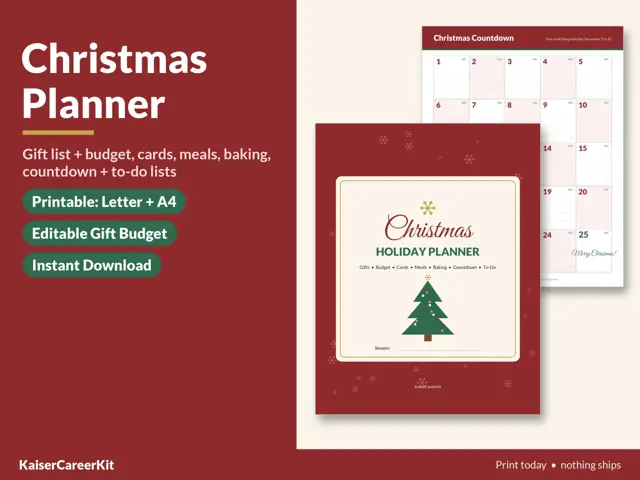
Christmas Planner Printable
Christmas Holiday Planner: gift list + budget, Christmas card tracker, holiday meal plan + shopping list, baking list, December 1-25 countdown calendar and to-do lists.
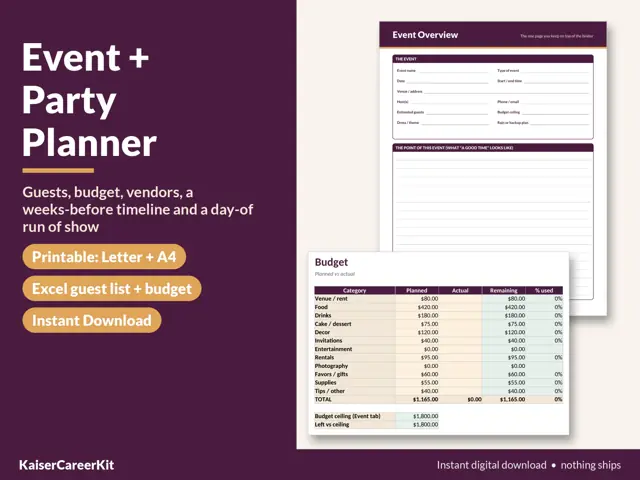
Party Planner Printable
Event + Party Planner: event overview, budget, guest list, vendors, menu, shopping list, a weeks-before timeline, day-of run of show, seating, tasks and thank-yous, plus an Excel budget, guest list and vendor file.
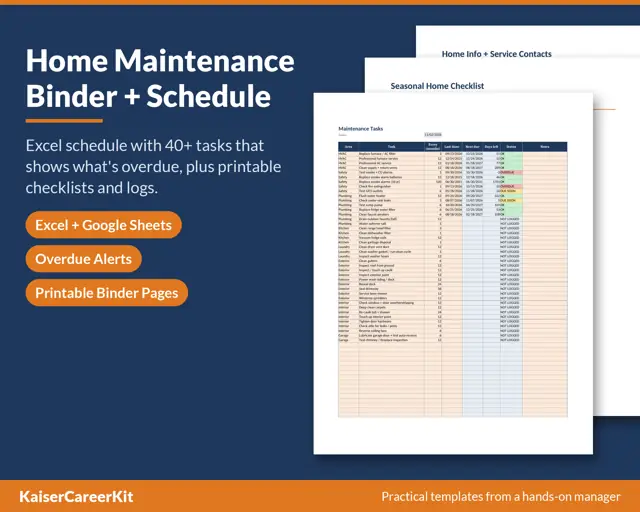
Home & Life Bundle
Home and everyday-life printables in one download. See the full contents list on the checkout page.
Also on Gumroad (opens in a new tab)
Optional
Related books
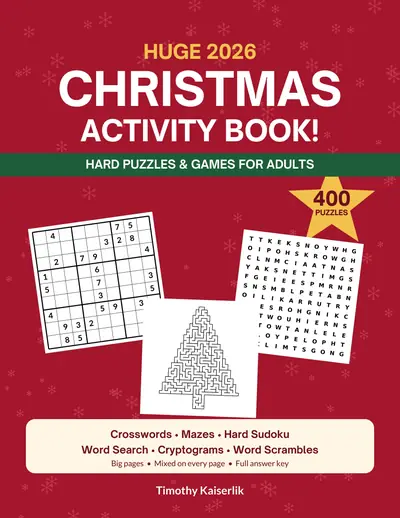
Huge 2026 Christmas Activity Book!
400 Hard Puzzles & Games for Adults: Crosswords, Mazes, Sudoku, Word Search, Cryptograms & Word Scrambles, with Answers

Christmas Trivia & Party Games for the Whole Family
200 Trivia Questions, 100 Riddles, 150 Would You Rather Questions and 25 Holiday Party Games
More like this
Home and Family
How to Make a Home Inventory for Insurance
Build a simple home inventory with photos, a room-by-room list, and stored copies, using public insurance and emergency-preparedness guidance.
Free printable
Get the free Christmas word search
Print a sample of our holiday word search puzzles for family game night, the classroom, or a quiet evening with coffee. Big, easy-to-read puzzles.
Free download, no purchase needed. The checkout page may ask for an email address to deliver the file.