
Garden and Homestead
A Beginner Square-Foot Garden Layout
TL;DR
- A square-foot layout divides a raised bed into a grid of one-foot squares and plants a set number of each crop in each square.
- Common counts are 1, 4, 9, or 16 plants per square, depending on the size of the crop. Treat those counts as a starting point, not a law.
- Build a bed you can reach across, fill it with loose soil, and sketch the grid before you buy every seed packet.
- Check frost dates and variety advice with your local Cooperative Extension, and read the seed packet for the variety you actually have.
Square-foot gardening is a way to organize a small raised bed: you divide the surface into a grid of one-foot squares and plant each square with a set number of plants, rather than in long rows with wide paths between them. The method was popularized by Mel Bartholomew and is now widely used in home gardens. This page is a beginner’s layout walk-through, not a complete gardening course and not a promise of a certain harvest. Plant spacing, soil, and timing vary by variety and climate. Confirm details with the seed packet and with your local Cooperative Extension office. You can find Extension through the U.S. Department of Agriculture’s National Institute of Food and Agriculture, which works with land-grant universities in every state.
Build a bed you can actually tend
A common beginner bed is four feet wide, so you can reach the middle from either side without stepping on the soil, and six or eight feet long, which gives you 24 or 32 squares. You can go smaller. A 3-by-3-foot bed is nine squares and is enough to learn the system. Place the bed where it will get the hours of sun your crops need — most fruiting vegetables want a full day of sun — and where you can get water to it without dragging a hose across the entire yard each evening.
Loose, well-drained soil matters more than the exact recipe of a brand-name mix. If you are building a new raised bed, use purchased garden soil or a mix recommended by your Extension office, and avoid using only heavy native clay or only leftover potting soil from a few old containers. A simple grid of thin slats, string, or even a measuring stick used at planting time is enough. You do not need a perfect wooden lattice to begin.
Learn the usual plants-per-square counts — then check your packet
Gardeners who use this system often plant one large plant per square (tomato, pepper, broccoli, cabbage, or zucchini), four medium plants (lettuce or chard), nine smaller plants (spinach or bush beans), or sixteen very small plants (carrots, radishes, or onions). Those counts are a teaching shorthand. They are not a research result that fits every variety. A large tomato may want more than one square, or a cage that shades its neighbors. A sprawling cucumber is often happier on a trellis than in a single square of open bed. Always read the packet for the variety in your hand, and ask Extension if you are planting something unusual or if you are in a very short or very long season.
University Extension vegetable-planting guides, such as the University of Minnesota Extension’s page on planting a vegetable garden, are also useful for frost dates, spacing ranges, and how deep to plant. Use those guides for climate and timing, and use the square-foot grid as a way to organize a small bed, not as a replacement for local advice.
Sketch the layout before you buy every seed
Write a short list of what your household will eat. Then assign squares on paper or in the garden planner on this site. Put tall crops on the north side of the bed (or on a trellis) so they do not shade shorter ones all afternoon. Give zucchini or other large plants extra room or a corner of their own. Mix a few quick crops, such as radishes or leaf lettuce, among slower ones so you have something to harvest while you wait. Leave two or three squares empty on the first planting day if you want space for a later sowing of beans or greens.
Do not try to grow twenty crops in one 4-by-8 bed in your first season. Eight to twelve kinds, with more than one square of the crops you eat often, is plenty. A layout you can label and water is more useful than a packed grid you cannot reach into.
Plant, label, and watch the season
Plant at the depth the packet describes. Water enough to settle the soil, and label each square with the crop and the date. In a tight grid it is easy to forget what the seedlings are. As plants grow, pinch or harvest greens so they do not crowd their neighbors, and pull a spent square rather than leaving a bolted lettuce to shade the next sowing.
If you garden in a short season, start long-season crops indoors or buy transplants, and use your frost dates — not a calendar from another state — to decide when they go out. The square-foot system does not change the weather. It only helps you use a small, well-tended space in an orderly way. Start with one bed this year. Next year you can add a second bed, or change the layout, with a note of what actually grew well in yours.
Sources
Try a free tool: Square-Foot Garden Planner. Lay out a raised bed in one-foot squares, place plants at typical square-foot spacing, and print a planting list.
Optional
A template if you want one
Use these if you want a ready-made file. The guides and tools work without them.
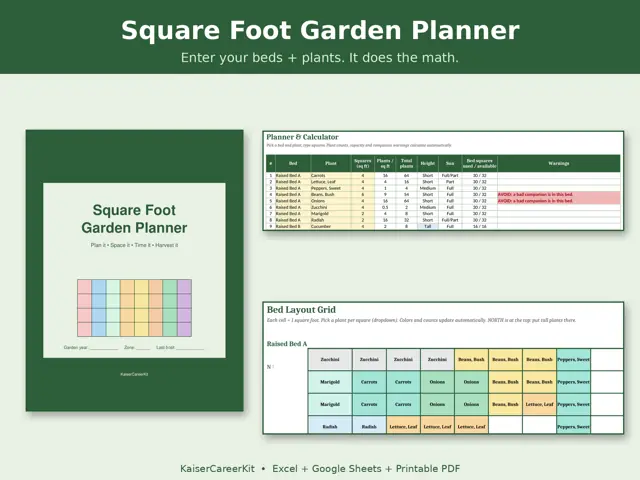
Square Foot Garden Planner Spreadsheet
Plan a garden that actually fits. Type in your bed sizes, pick your plants, and this square-foot garden planner works out how many plants fit, flags crowded beds and bad plant neighbors, and builds…
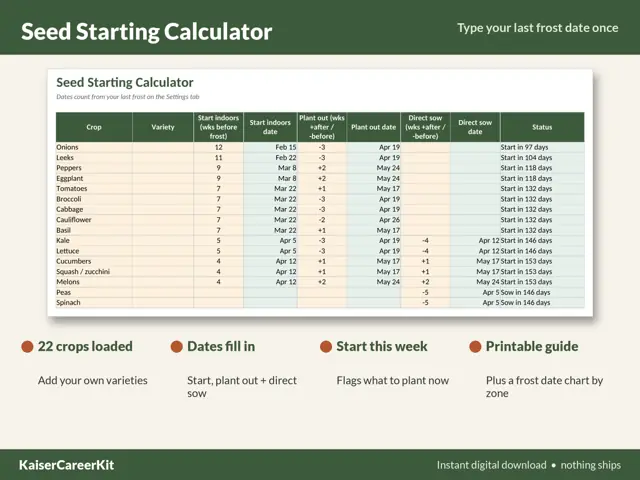
Homestead Canning Planner
Garden + Canning Planner: a seed-to-shelf homestead binder for starting seeds by zone, logging every canning batch, and tracking your pantry, eggs, animals and homestead budget.
Optional
Related books
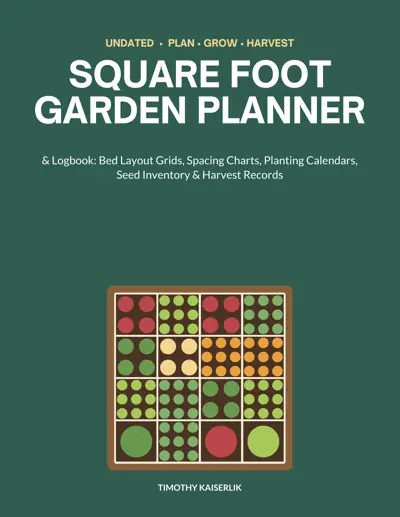
Square Foot Garden Planner & Logbook
An Undated Vegetable Garden Journal with Bed Layout Grids, Spacing Charts, Planting Calendars, Seed Inventory & Harvest Records
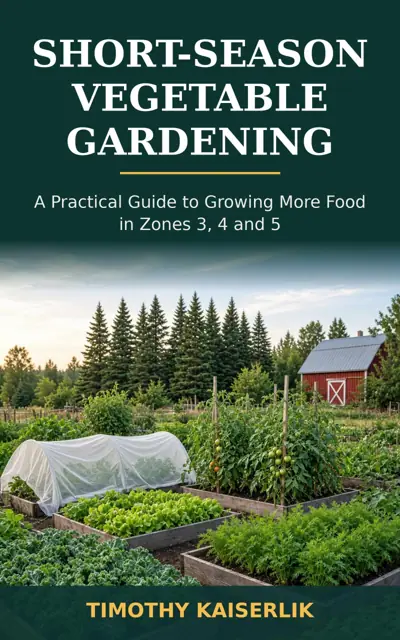
Short-Season Vegetable Gardening
A Practical Guide to Growing More Food in Zones 3, 4 and 5
Further reading
All New! Square Foot Gardening, 4th Edition (opens in a new tab) by Square Foot Gardening Foundation
The current edition of the classic small-space grid method: build a box, fill it, and plant by the square.
More like this
Garden and Homestead
Water-Bath Canning Safety Basics
Learn when water-bath canning is appropriate, what not to do, and how to follow USDA and NCHFP tested recipes. We do not invent processing times.
Free printable
Get the free Christmas word search
Print a sample of our holiday word search puzzles for family game night, the classroom, or a quiet evening with coffee. Big, easy-to-read puzzles.
Free download, no purchase needed. The checkout page may ask for an email address to deliver the file.