
Garden & homestead
Square-Foot Gardening in a Short Season: A Planning Guide for Zones 3–5
By Timothy Kaiserlik ·
When your last spring frost is in late May and the first fall frost can show up in September, every square of garden space has to earn its keep. Square-foot gardening is a great fit for short seasons: small raised beds warm up faster in spring, they're easy to cover on cold nights, and a grid makes it simple to plan exactly what goes where.
Step 1: Find your frost dates and count your weeks
Look up your average last spring frost and first fall frost (your local extension service publishes these). The weeks in between are your frost-free season. In USDA zones 3–5 that's often somewhere around 90 to 150 days, depending on where you are. Write both dates at the top of your plan. Everything else, from seed starting to transplanting, is counted backward or forward from them.
Step 2: Lay out the beds
The classic bed is 4 feet by 4 feet, divided into sixteen 1-foot squares. Four feet wide means you can reach the middle from either side without stepping on the soil. Put tall crops (trellised peas, pole beans, tomatoes) on the north side so they don't shade everything else, and leave paths wide enough for a wheelbarrow.
Step 3: Use the spacing rule of 1, 4, 9, or 16
Each square holds 1, 4, 9, or 16 plants depending on how big the plant gets. These are common starting points:
| Plants per square | Examples |
|---|---|
| 1 | Tomato (staked or caged), pepper, broccoli, cabbage, cauliflower |
| 4 | Leaf lettuce, Swiss chard, bush beans (some growers use 9), parsley, marigolds |
| 9 | Beets, spinach, bush beans, peas on a trellis (8–9) |
| 16 | Carrots, radishes, onions (sets), green onions |
Large sprawlers like zucchini and winter squash usually need 2–4 squares per plant, or a trellis. Read your seed packet: if it says "thin to 3 inches apart," that's 16 per square; "6 inches" is 4; "12 inches" is 1.
Step 4: Pick crops and varieties that fit your season
- Check "days to maturity" on every packet and compare it with your frost-free weeks. Choose early or short-season varieties of tomatoes, peppers, melons, and corn.
- Start warm-season crops indoors. Tomatoes and peppers are usually started 6–8 weeks before the last frost. Transplant after the frost date once nights stay warm.
- Direct-sow cool-season crops early. Peas, spinach, lettuce, radishes, and many root crops can go in a few weeks before the last frost, as soon as the soil can be worked.
Step 5: Stretch the season on both ends
- Floating row cover adds a few degrees of frost protection and keeps flea beetles off young greens.
- Hoops and plastic over a 4×4 bed make a simple mini hoop house for early spring and late fall.
- Dark mulch or plastic warms the soil before you plant heat lovers.
- Watch the forecast in fall. Cover tender crops on the first frosty nights. A mild stretch often follows, buying you extra harvest weeks.
Step 6: Plan succession so no square sits empty
When radishes or spinach finish in early summer, replant that square right away with bush beans or another quick crop, then follow with fall lettuce or spinach. Write the planting date and the next crop on your plan so you're ready when a square opens up.
Step 7: Keep records
Note what you planted, when, how it did, and when the frosts actually came. After one or two seasons, your own notes become the best planting calendar you'll ever have, because they're based on your yard, not an average.
Templates that help
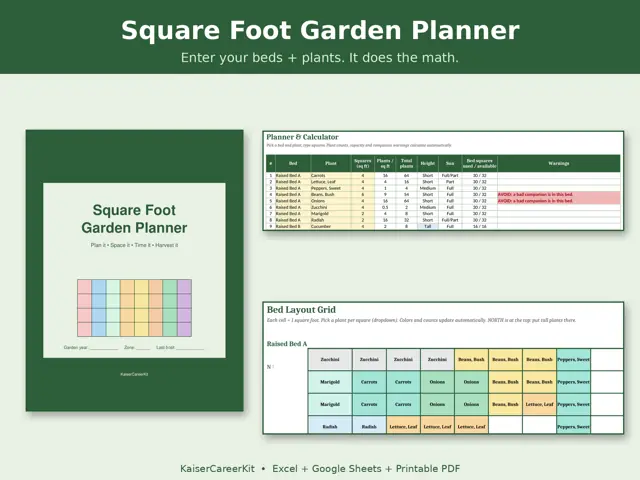
Square Foot Garden Planner Spreadsheet
Plan a garden that actually fits. Type in your bed sizes, pick your plants, and this square-foot garden planner works out how many plants fit, flags crowded beds and bad plant neighbors, and builds…
30% off with LAUNCH30 through Dec 10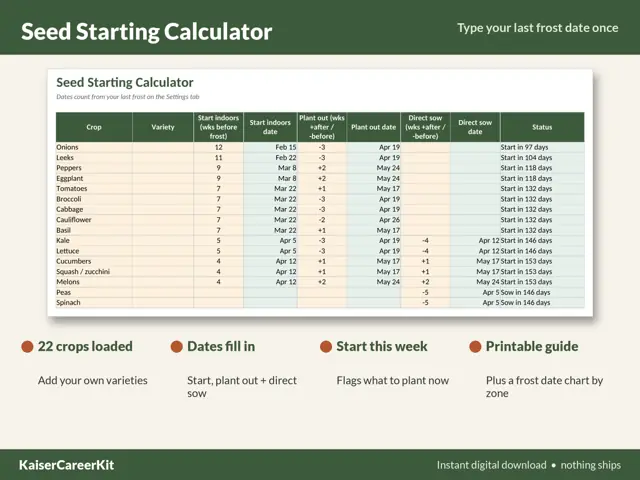
Homestead Canning Planner
Garden + Canning Planner: a seed-to-shelf homestead binder for starting seeds by zone, logging every canning batch, and tracking your pantry, eggs, animals and homestead budget.
30% off with LAUNCH30 through Dec 10Garden & Canning Planner Bundle
Garden planning pages, planting and harvest tracking, and canning inventory sheets, all in one printable PDF. Instant download, print at home.
Related books
Short-Season Vegetable Gardening
A Practical Guide to Growing More Food in Zones 3, 4 and 5
Square Foot Garden Planner & Logbook
An Undated Vegetable Garden Journal with Bed Layout Grids, Spacing Charts, Planting Calendars, Seed Inventory & Harvest Records
Free printable
Get the free Christmas word search
Print a sample of our holiday word search puzzles for family game night, the classroom, or a quiet evening with coffee. Big, easy-to-read puzzles.
Free download, no purchase needed. The checkout page may ask for an email address to deliver the file.