
HR & hiring
How to Write an Employee Handbook for a Small Business
By Timothy Kaiserlik ·
Most arguments at work come down to "nobody told me." An employee handbook fixes that by putting your rules, pay practices, and expectations in one place that everyone signs. You don't need a 90-page binder. A clear 15–25 page handbook that your crew will actually read beats a long one that sits in a drawer.
What an employee handbook does (and doesn't do)
A handbook explains how your workplace runs: when people get paid, how to call in, what happens when someone breaks a rule, and who to talk to about a problem. It protects you because it shows you told everyone the same thing, and it protects employees because the rules are written down instead of changing with the manager's mood.
It is not a contract, and it doesn't replace federal, state, or local law. Laws on things like paid sick leave, final paychecks, and breaks differ a lot from state to state, so treat any template as a starting point and check the state-specific parts before you hand it out.
The sections most small businesses need
- Welcome and purpose. A few sentences about the business and why the handbook exists.
- Employment basics. At-will statement (in states where that applies), employee classifications (full-time, part-time, seasonal), and the introductory period if you use one.
- Equal opportunity and anti-harassment. What is prohibited, how to report it, more than one person to report to, and a no-retaliation promise.
- Pay and timekeeping. Pay schedule, how hours are recorded, overtime approval, and how to fix a timecard mistake.
- Attendance and scheduling. How far ahead the schedule is posted, how to request time off, and exactly how to call in sick (who, how, and how early).
- Time off and leave. Holidays, PTO or vacation, sick leave, and any leave your state requires.
- Conduct and performance. Dress code, phones, breaks, and what a write-up process looks like.
- Safety. How to report injuries and near misses, and who handles first aid.
- Technology and privacy. Company devices, social media, and confidential information.
- Leaving the company. Notice you'd like, returning equipment, and the final paycheck.
- Acknowledgment form. A one-page sign-off that the employee received and read the handbook.
A simple way to write it in a weekend
- Write down what you already do. Before you open a template, list your real pay day, call-in rule, and break schedule. The handbook should describe your business, not someone else's.
- Start from a template. Pre-written policy sections save hours. Delete what doesn't apply and fill in the blanks.
- Use plain language. "Text your shift lead at least two hours before your shift" is better than "employees shall provide reasonable advance notice."
- Check the state-specific items. Sick leave, final pay timing, meal and rest breaks, and leave laws are the usual trouble spots. Your state labor department website is a good free place to check.
- Roll it out in person. Hand it out at a short meeting, walk through the top five rules, answer questions, and collect signed acknowledgments.
- Track the signatures. Keep a simple list of who signed which version and when. When you update a policy, send a short memo and collect a new signature.
Common mistakes to avoid
- Promising things you won't do. If the handbook says reviews happen every six months, do them, or change the handbook.
- One reporting path. If the only person to report harassment to is the person causing it, the policy fails. Name at least two.
- Copying another state's rules. A policy written for one state can be wrong in yours.
- Never updating it. Review it once a year and whenever a law or your pay practices change.
Keep the paperwork that goes with it
A handbook works best next to a few everyday forms: an offer letter, onboarding checklist, time-off request, and a written warning form. When those match the handbook, your process is consistent from the first day to the last.
This article is general information, not legal advice. For questions about your specific situation, talk to an employment attorney or your state labor department.
Templates that help
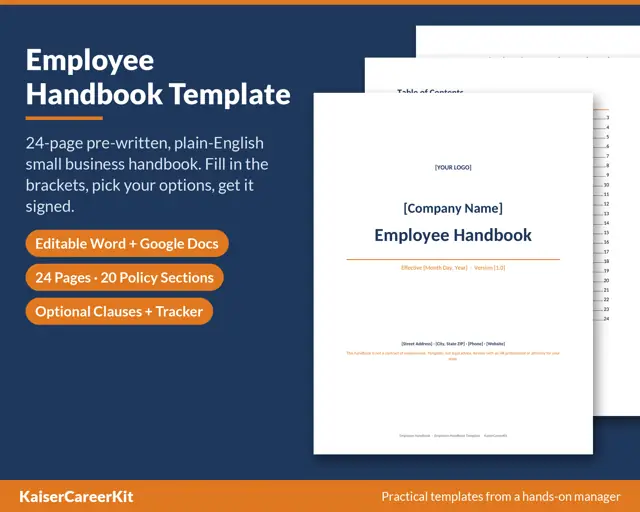
Employee Handbook Template
I've hired, trained and coached crews in a manufacturing shop, a hotel and a paint department.
30% off with LAUNCH30 through Dec 10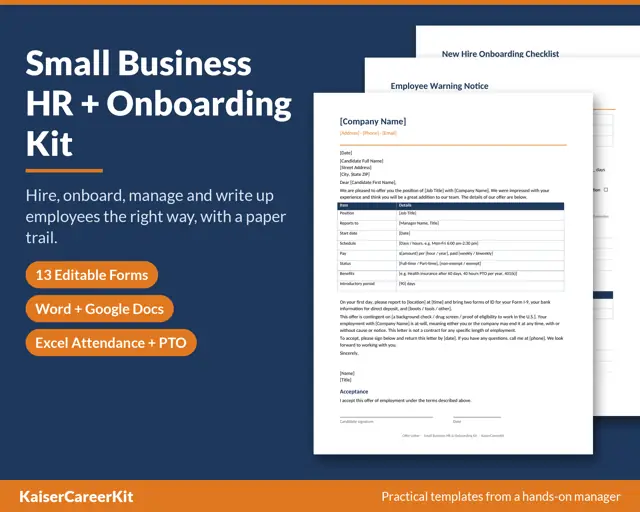
Employee Onboarding Checklist + Small Business HR Forms Kit
Hiring your first employees, or tired of making HR forms from scratch every time?
30% off with LAUNCH30 through Dec 10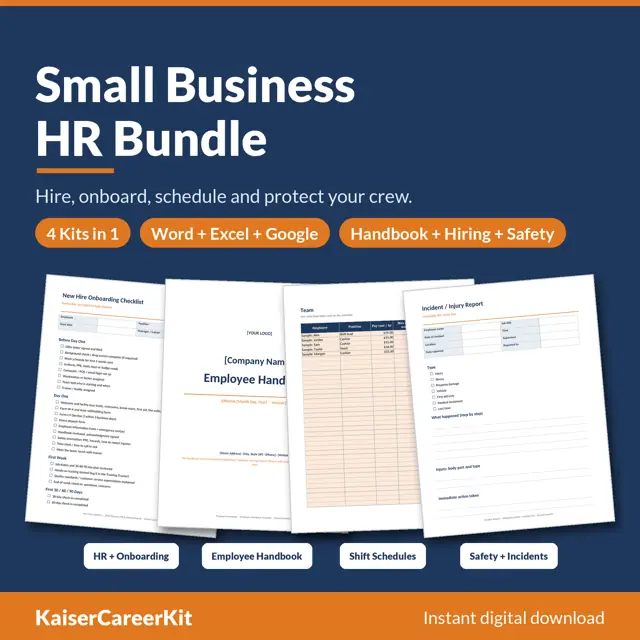
Small Business HR Bundle
A small business HR bundle with 4 complete template kits for owners and managers who are hiring, onboarding, scheduling and keeping a crew safe, from the first job post to an employee's last day.
30% off with LAUNCH30 through Dec 10Related books

The New Supervisor on the Shop Floor
A Practical Guide for First-Time Managers in Manufacturing, the Trades and Operations
Free printable
Get the free Christmas word search
Print a sample of our holiday word search puzzles for family game night, the classroom, or a quiet evening with coffee. Big, easy-to-read puzzles.
Free download, no purchase needed. The checkout page may ask for an email address to deliver the file.