
Money
Budgeting Paycheck to Paycheck: A Simple Weekly Method That Works
By Timothy Kaiserlik ·
Monthly budgets don't work well when you get paid every week or every other week and bills land at random times. The fix is to budget per paycheck: decide in advance which check pays which bill. It sounds simple, and it is, but it changes everything about how a tight month feels.
Step 1: List every bill with its due date
Write down every regular bill: rent or mortgage, car payment, utilities, phone, insurance, subscriptions, and any loan or buy-now-pay-later installments. Next to each, write the amount and due date. Don't forget payments that come out automatically. Those are the ones that surprise people.
Step 2: Line up your paydays
On a calendar, mark every payday for the next two months and the expected amount of each check. Use your take-home pay, not your gross pay.
Step 3: Assign each bill to a paycheck
For each bill, pick the paycheck that arrives before the due date. Add up the bills assigned to each check. Now you can see the problem weeks in advance: one paycheck might carry $1,100 in bills while the next carries $300.
To even it out:
- Ask to move due dates. Many lenders, utilities, and phone companies will change a due date if you ask.
- Pay part early. Set aside half of a big bill from the light paycheck so the heavy one isn't overloaded.
Step 4: Give the rest of each check a job
After bills, split what's left into a few buckets: groceries, gas, household, and a small amount of fun money. When a bucket is empty for the week, it's empty. Many people find cash envelopes or a separate debit card for groceries and gas makes this easier.
Step 5: Build sinking funds for the "surprise" bills that aren't surprises
Car repairs, registration, school costs, and Christmas happen every year. Divide the yearly cost by the number of paychecks and set that amount aside each time. Even $10–$20 a check adds up and keeps these costs from turning into a pay advance or a card balance.
Step 6: Start a tiny buffer, then attack debt
Your first goal is a small cushion, even $200–$500, so one bad week doesn't force a short-term loan. Then pick a debt payoff method:
- Debt snowball: pay minimums on everything and put extra toward the smallest balance first. Quick wins keep you motivated.
- Debt avalanche: put extra toward the highest interest rate first. This saves the most money over time.
Watch out for the advance cycle
Paycheck advances, short-term app loans, and splitting everyday purchases into installments can each look small. Stacked together, they take a big bite out of the next paycheck, which makes the next week short again. If you use them now, list every scheduled repayment in Step 1 so you can see the full picture, and make getting off them a goal.
Review it every payday
Take ten minutes each payday: check off what got paid, move money into your buckets, and look at what's coming up next. After a couple of months, you'll know exactly what each check has to cover.
This article is general information, not financial advice.
Templates that help
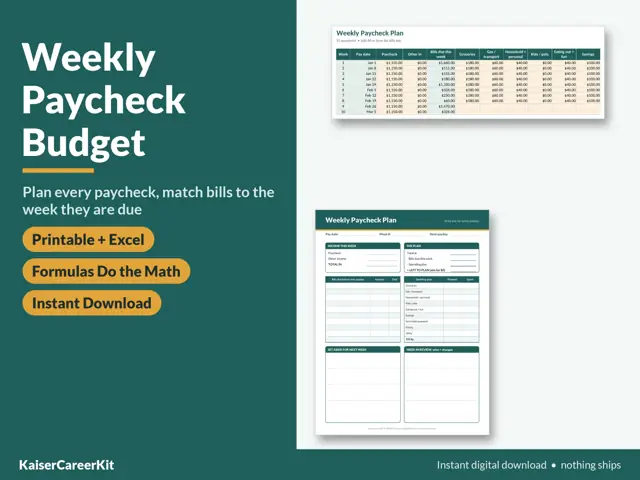
Weekly Paycheck Budget Planner
Weekly Paycheck Budget Planner: plan every paycheck, see which bills are due each pay week, and track sinking funds, debt payoff and savings.
30% off with LAUNCH30 through Dec 10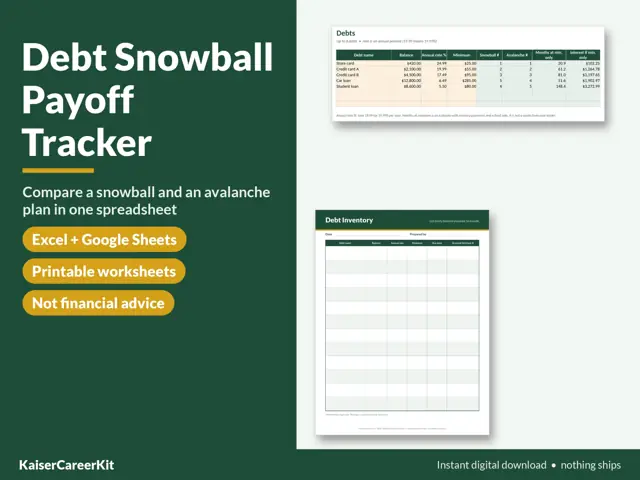
Debt Snowball Spreadsheet
Debt Snowball Payoff Tracker: a spreadsheet that compares a snowball plan (smallest balance first) and an avalanche plan (highest rate first) across up to 8 debts and 72 months, plus printable…
30% off with LAUNCH30 through Dec 10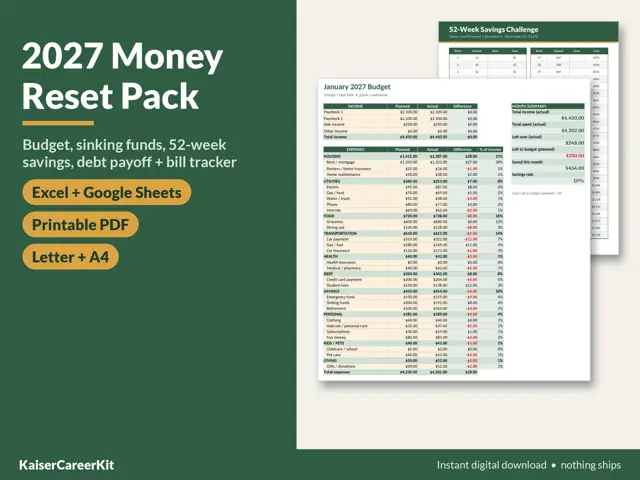
2027 Money Reset Pack
2027 New Year Money Reset Pack: monthly budget, sinking funds tracker, 52-week savings challenge, debt payoff tracker and bill tracker.
30% off with LAUNCH30 through Dec 10Money Bundle
Our money and business templates in one download. See the full contents list on the checkout page.
Also on Gumroad (opens in a new tab)
Free printable
Get the free Christmas word search
Print a sample of our holiday word search puzzles for family game night, the classroom, or a quiet evening with coffee. Big, easy-to-read puzzles.
Free download, no purchase needed. The checkout page may ask for an email address to deliver the file.